
Step-by-step: How to Install a SnapZ Vented Metal Ridge Cap
As a roofing contractor, you know that the ridge detail of a metal roof is critical. When it’s done right, it ensures proper ventilation and long-term performance. But when it’s done wrong? That’s when the callbacks start rolling in—cracks, leaks, and poor airflow all lead to frustrated homeowners and damaged reputations.
With a SnapZ vent, proper installation is built in, so you’re set up for success as soon as you order one of our patented ridge vent systems
In this guide, we’ll walk you through the step-by-step process of installing a SnapZ vented metal ridge cap on a standing seam metal roof. We’ll focus on best practices, quality-control considerations, and the proper sequencing to improve consistency, reduce callbacks, and ensure the job is done right the first time—every time. Whether you're a seasoned pro or just getting started, these tips will help you deliver high-quality work that stands the test of time.
Ready? Grab your hard hat, and let’s get started!













TL;DR – Step-by-step: How to Install a SnapZ Vented Metal Ridge Cap
- Vented Ridge Importance: A vented ridge, such as the SnapZ system, works with soffit vents to create continuous airflow, drawing in cool air and exhausting warm air, which is critical for proper roof ventilation and preventing moisture issues.
- Preparation is Key: Before starting, contractors must verify the roof pitch (at least 3/12), ensure adequate eave intake ventilation, and gather all necessary tools and materials, including a chalk line, fasteners, sealant, and a power drill.
- Core Installation Steps: The process involves snapping a precise chalk line, preparing the SnapZ (removing the butyl tape backing and adjusting the foam), securing the SnapZ with Type 410 fasteners, applying sealant, installing the ridge cap, and finally sealing and riveting the ridge cap to the SnapZ.
- Safety and Quality Control: Metal roofs are slick and high-risk, requiring strict adherence to safety standards, including no-wet-roof days and mandatory fall protection (OSHA-required at 6 ft). A final quality check ensures fasteners are tight, sealant is continuous, and the cap is aligned before cleaning up the job site.
What is a Vented Ridge and Why Do Contractors Use It?
Simply put, a vented ridge, or a roof ridge vent, is a continuous roof vent cut into the peak and extending the full length of the roof’s ridge. Vented ridge vents work with soffit vents, which are installed under a house's eaves. The soffit vents draw in cooler, fresh air, while the warm, “used” air exits through the ridge vents. It’s one of the most effective ways to vent a roof.
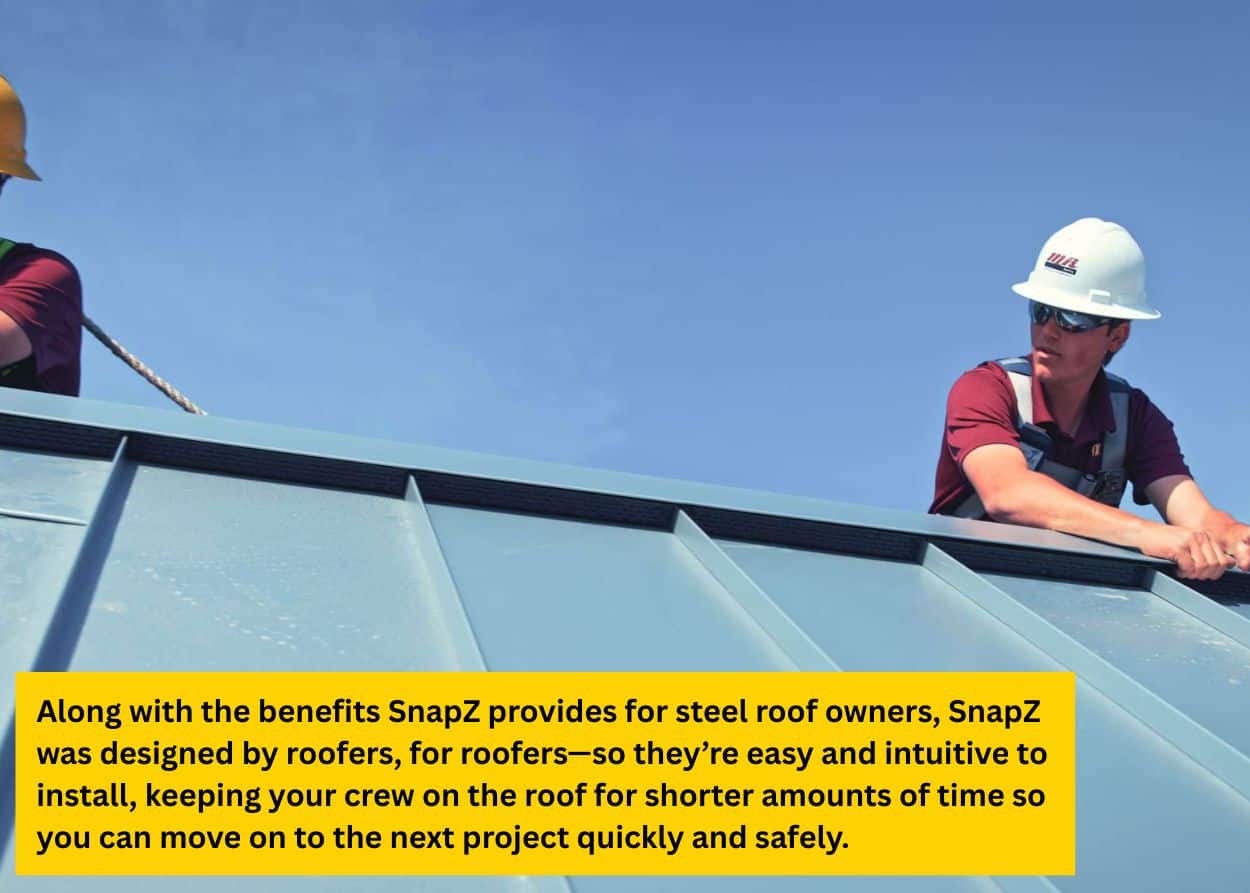
SnapZ takes the ridge vent further. Along with the benefits SnapZ provides for steel roof owners, SnapZ was designed by roofers, for roofers—so they’re easy and intuitive to install, keeping your crew on the roof for shorter amounts of time so you can move on to the next project quickly and safely.
If you’d like to explore more about roof ridge vents, check out our FAQ.
Tools and Materials You’ll Need
To install a ridge vent, you’ll need the following tools:
- A Chalk Line
- A Power Drill
- Type 410 fasteners
- Pop rivets
- Sealant
- Metal snips
Plan and Prepare for the Job
Before you even set foot on the roof, the key to success is preparation. A properly-installed ridge vent starts with planning.
- Check the roof pitch: Ensure the roof pitch is at least 2/12 to meet the minimum requirements for a vented ridge cap system. If you’re working on a steeper roof, that’s great—just make sure you have the right equipment to handle it.
- Review the ventilation system: Ventilation is a critical part of the roofing system. Make sure there is adequate intake ventilation at the eaves to work in tandem with the ridge vent. Without proper intake, the ridge vent won’t function as intended, leading to moisture buildup in the attic.
- Gather the tools and materials: Double-check that you have all the necessary items before starting the installation, including a screw gun, Type 410 fasteners, sealant, rivets, a chalk line, and snips for cutting the ridge cap, if needed.
Step 1: Snap Your Chalk Line
Once you're on the roof, it’s essential to establish a clean, level starting point for your ridge cap.
- Use a chalk line to snap a straight reference line 1/8" to 1/16" above where the ridge cap will sit. This line ensures that your ridge cap is installed uniformly and aligned with the top of the panels.
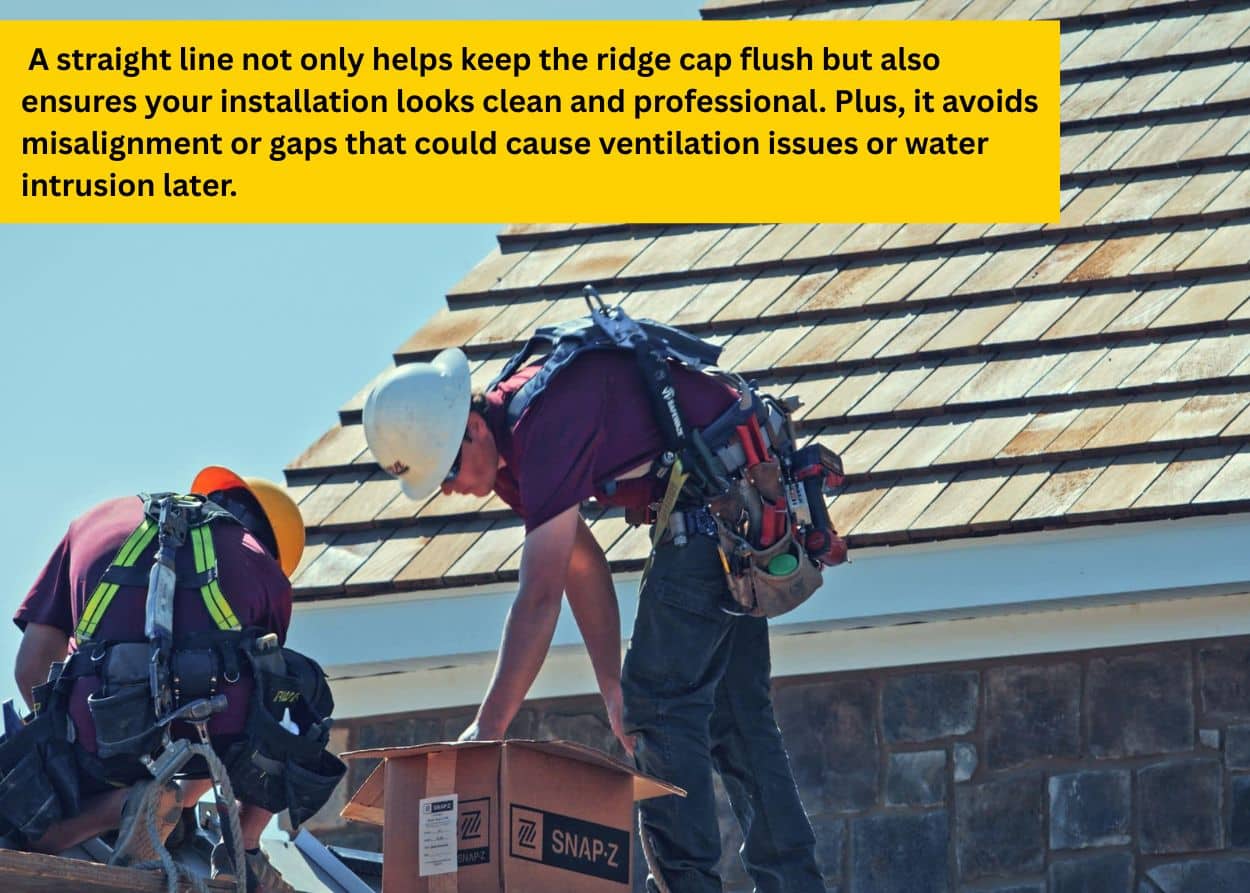
- Why this matters: A straight line not only helps keep the ridge cap flush but also ensures your installation looks clean and professional. Plus, it avoids misalignment or gaps that could cause ventilation issues or water intrusion later.
Step 2: Prep the SnapZ Vented Ridge Cap
The SnapZ system simplifies the ridge vent installation, especially if you’re using pre-cut sections with pre-applied butyl tape.
- Remove the backing from the butyl tape and ensure it’s ready to make contact with the roof panels. This butyl tape ensures the ridge cap remains securely in place and serves as a sealant to prevent leaks.
Note: As of (year), SnapZ vents come preinstalled with butyl tape. If you do not have butyl tape preinstalled, you have the older version.
- Pull out the overstuffed foam just enough to fill the gap between the top of the panel ribs and the SnapZ. The foam should form a solid seal along the ridge to prevent wind, rain, and pests from getting into the attic.
Step 3: Fasten the SnapZ to the Roof
Now it’s time to secure the SnapZ to the roof. This step ensures the venting system is securely fastened and properly sealed.
- Use the pre-punched fastener locations on the SnapZ as your guide. Don’t have pre-punched locations? You likely have the older version—instead, install screws at 3 inches on center, or at least 4 screws.
- Install fasteners every 2-3 inches, ensuring they penetrate at least 1/2” into the roof decking. This provides a solid, weather-resistant attachment.
- Tip for consistency: SnapZ recommends using Type 410 fasteners, which are specifically designed for metal roofing systems. These fasteners resist rust and corrosion, providing a long-term, durable seal.
Step 4: Apply Sealant
Once the SnapZ is in place, you’ll want to ensure that everything is sealed and aligned adequately before attaching the ridge cap.
- Apply sealant generously at the point where the SnapZ meets the panel ribs. This prevents any air or moisture from infiltrating the ridge and ensures a tight, water-resistant fit.
- You may need to move the foam to the side to apply sealant over there the foam pushes up against the rib.
Step 5: Prepare the Ridge Cap
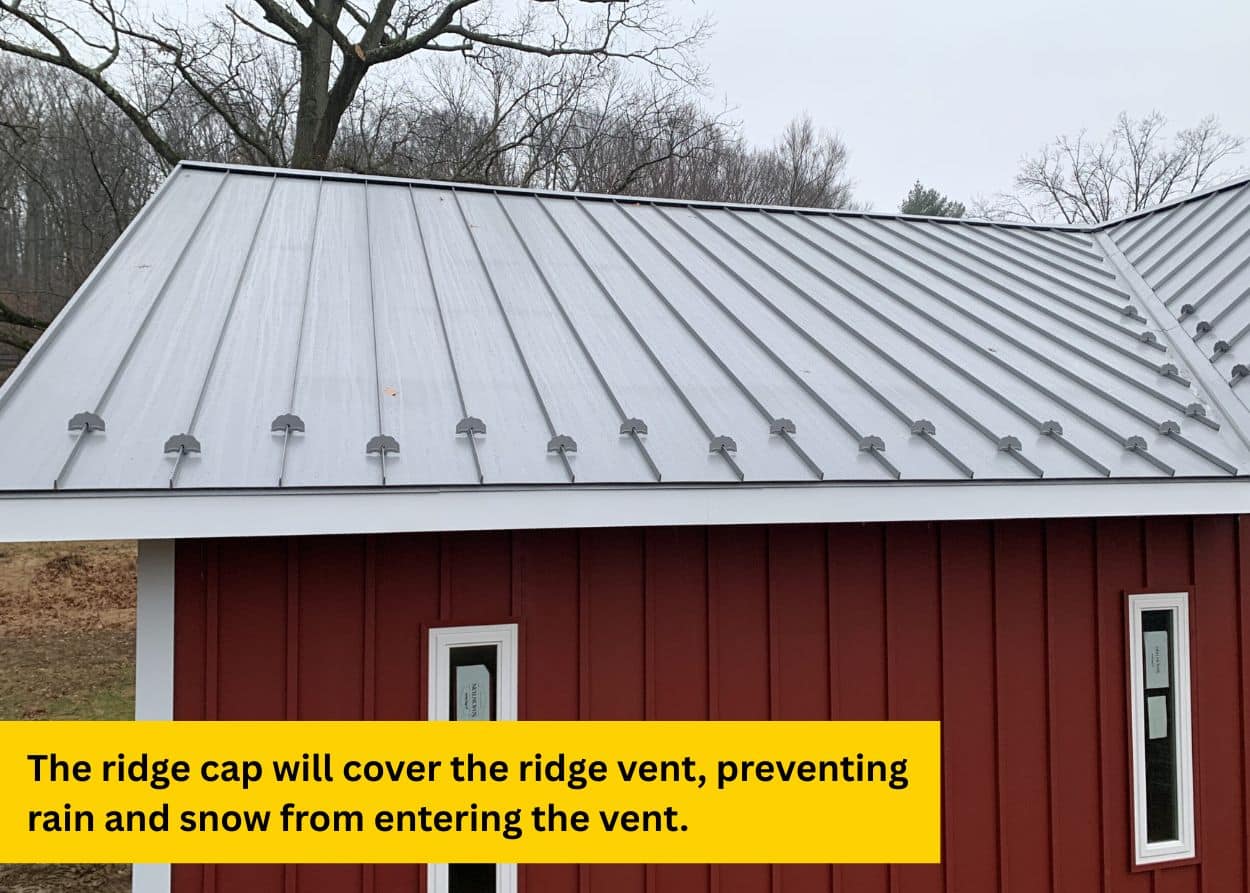
The ridge cap will cover the ridge vent, preventing rain and snow from entering the vent.
- Fold the ridge cap panel along the centerline at 90º, forming the cap.
- Measure and cut off equal sections of the 1-inch open-hemmed ridge cap.
- Fold the open sections of the hem to form the ridge edge.
Step 6: Install the Ridge Cap
- Install the ridge cap: Snap the ridge cap securely into place on top of the ridge vent. The cap should sit evenly along the ridge line, with no gaps or misalignment.
- Tip for longevity: Apply a thin layer of sealant on the overlaps of the ridge cap to ensure a continuous water-tight seal.
Step 7: Seal and Rivet the Ridge Cap to the SnapZ
Riveting the ridge cap to the SnapZ ensures it stays securely in place, even in harsh weather. This step is critical for ensuring that the system can withstand wind and other external forces.
- Apply sealant to any ridge cap overlaps.
- Use at least 3 rivets per 10 feet of ridge cap to secure the cap to the SnapZ system. If your SnapZ kit or instructions call for a different rivet spacing, follow the manufacturer’s recommendations.
- Install rivets through the holes in the ridge cap to secure it firmly to the SnapZ. Use a pop rivet tool for clean and secure fastening.
Step 8: Final Quality Control Check
After installing the ridge cap and securing all fasteners and rivets, it’s time for a final check to ensure everything is installed correctly.
- Check the fasteners: Ensure they’re all properly tightened, with consistent spacing and placement along the SnapZ and ridge cap.
- Sealant inspection: Make sure that the sealant around the rib joints and overlaps is continuous and properly applied. This step is critical to preventing future leaks.
- Ridge cap alignment: Verify that the ridge cap sits flush and evenly along the ridge. There should be no bulges or areas where the cap isn’t sitting correctly.
Step 9: Clean Up and Review
Once the installation is complete, take a moment to clean up the job site. Proper cleanup not only helps maintain safety but also ensures you leave the customer with a finished, professional roof.
- Check for debris or scrap materials that could cause damage or block airflow.
- Review the attic ventilation once the install is complete. Ensure that airflow is unimpeded and that the attic is properly ventilated. This is a key factor in reducing the risk of moisture buildup, mold, and other issues that could compromise the roof’s performance.
And that’s it! SnapZ’s quick and easy installation keeps your time on the roof as low as possible, so that you can move on to the next job and fulfil more contracts.
Safety Tips for Roofers Installing SnapZ
Metal roofs are slick, even when they look dry. And ridge work puts you right where a slip turns into a bad day. SnapZ recommends basic safety equipment, such as safety glasses and a harness, as needed.
Here’s a simple “crew standard” you can enforce on every SnapZ install:
- No wet roof days (or frost/condensation). If it’s damp, reschedule or change the plan. Metal + moisture = skating rink.
- Fall protection isn’t optional. OSHA requires fall protection at 6 ft or higher in construction, including roofing work.
- Use the correct PPE. Gloves for sharp edges. Safety glasses for drilling/riveting.
- Set up ladders the right way: stable base, solid tie-off, and the 4:1 angle rule. No moving a ladder with someone on it.
- Keep the ridge clean. Loose offcuts and sealant tubes quickly become trip hazards. SnapZ also recommends keeping the ridge clean and free of debris before installation.
- Use a helper when possible. Not required, but it accelerates work and reduces risky “overreaching” moves.
Quick crew leader check: If you see a rushed ladder setup, no glasses, or someone free-handing near the ridge… stop the line. Fix it now. Callbacks are expensive. Injuries are worse.
Protecting your crew is how you keep your company profitable and reputable. You can find out more about protecting your roofers with this OSHA guide.
A Standard Process for Efficiency and Safety
A vented metal ridge cap should be one of the cleanest details on a standing seam roof. But only if your crew installs it the same way—every time.
That’s why the process matters. Do it quick. Do it right: Snap your line. Prep the butyl and foam. Fasten at consistent spacing with proper penetration. Seal where the SnapZ meets the ribs. Snap the cap on, seal overlaps, and rivet to spec. Then do a final QC check: straight, tight, sealed, and vent path clear.
And don’t forget the obvious. Metal roofs are slick. Ridge work is high risk. Build safety into the routine, not as an afterthought.
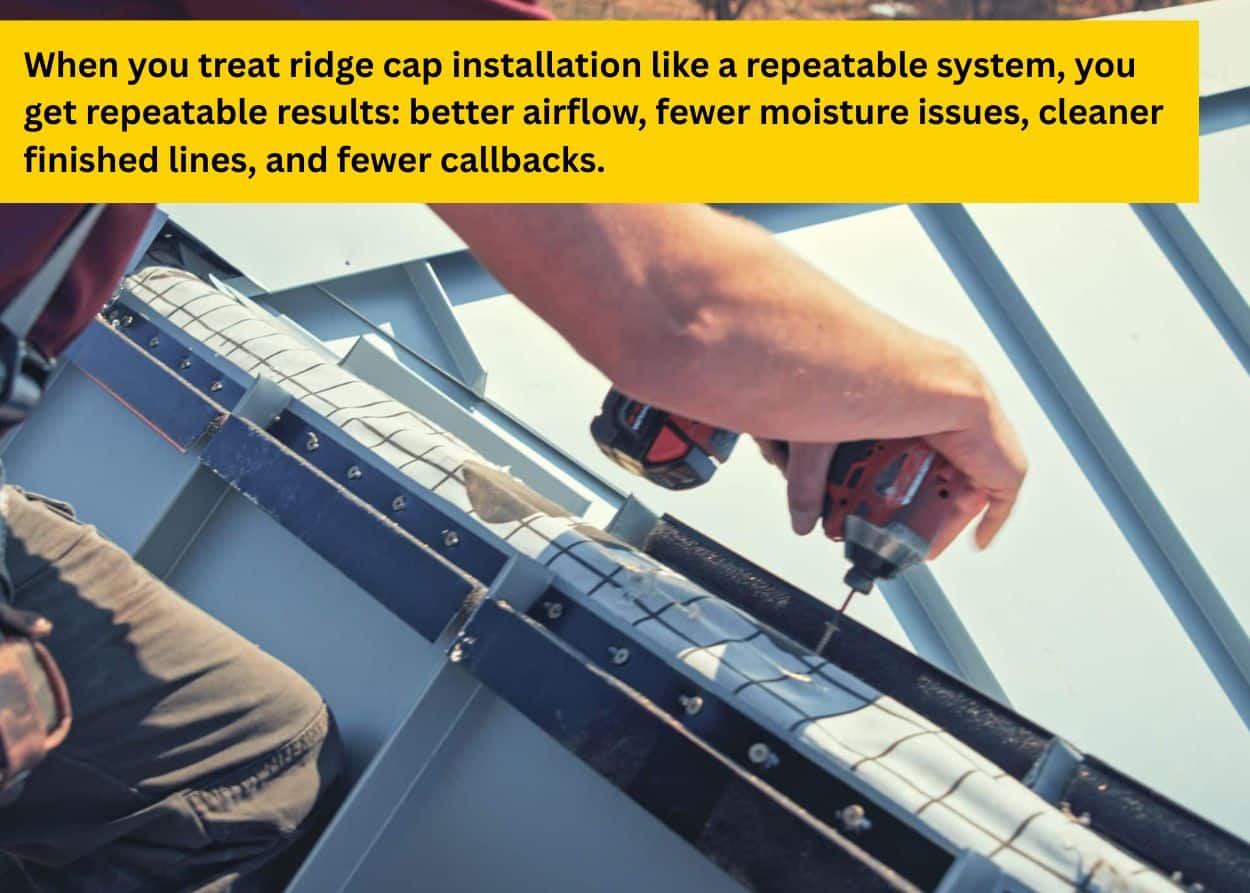
When you treat ridge cap installation like a repeatable system, you get repeatable results: better airflow, fewer moisture issues, cleaner finished lines, and fewer callbacks.
Got more questions? Contact us at SnapZ. We’re always happy to help!