
A Guide to Types of Metal Roof Ventilation
TL;DR - Types of Metal Roof Ventilation
Proper attic ventilation is critical for metal roofs to prevent heat buildup, moisture issues, mold, rust, and ice dams. There four common ventilation types for metal roofs—ridge vents, soffit vents, gable vents, and turbine vents. Snap-Z revolutionizes the way ridge vents work and are installed, and can streamline and transform your roofing business.
A Guide to Types of Metal Roof Ventilation
Let’s be honest. Roof ventilation probably isn’t something you think about often.
But if you’ve got a metal roof—or you're planning to install one—it should be.
Why? Because improper ventilation can quietly wreck your roof from the inside out. We're talking about heat buildup, moisture problems, mold, rust, ice dams, and higher utility bills—the whole mess!
The good news is that your roofer is required by building code to install some form of ventilation system for your roof. But what type?
At Snap-Z Vent, our vent system is the best option for metal roofs; however, we acknowledge that it may not be suitable for all types of roofs.
Let’s walk through the different types of metal roof ventilation, how they work, and which setup makes the most sense for your structure. Whether you're a homeowner, contractor, or building owner, this guide will give you clarity.








Why Roof Ventilation Matters—Especially on Metal
Metal roofs are renowned for their toughness, longevity, and energy efficiency.
But without proper ventilation underneath, that durability can start working against you.
Think of your attic or upper structure like a sealed pressure cooker. If there’s no way for heat or moisture to escape, things start to break down very quickly—something to be avoided.
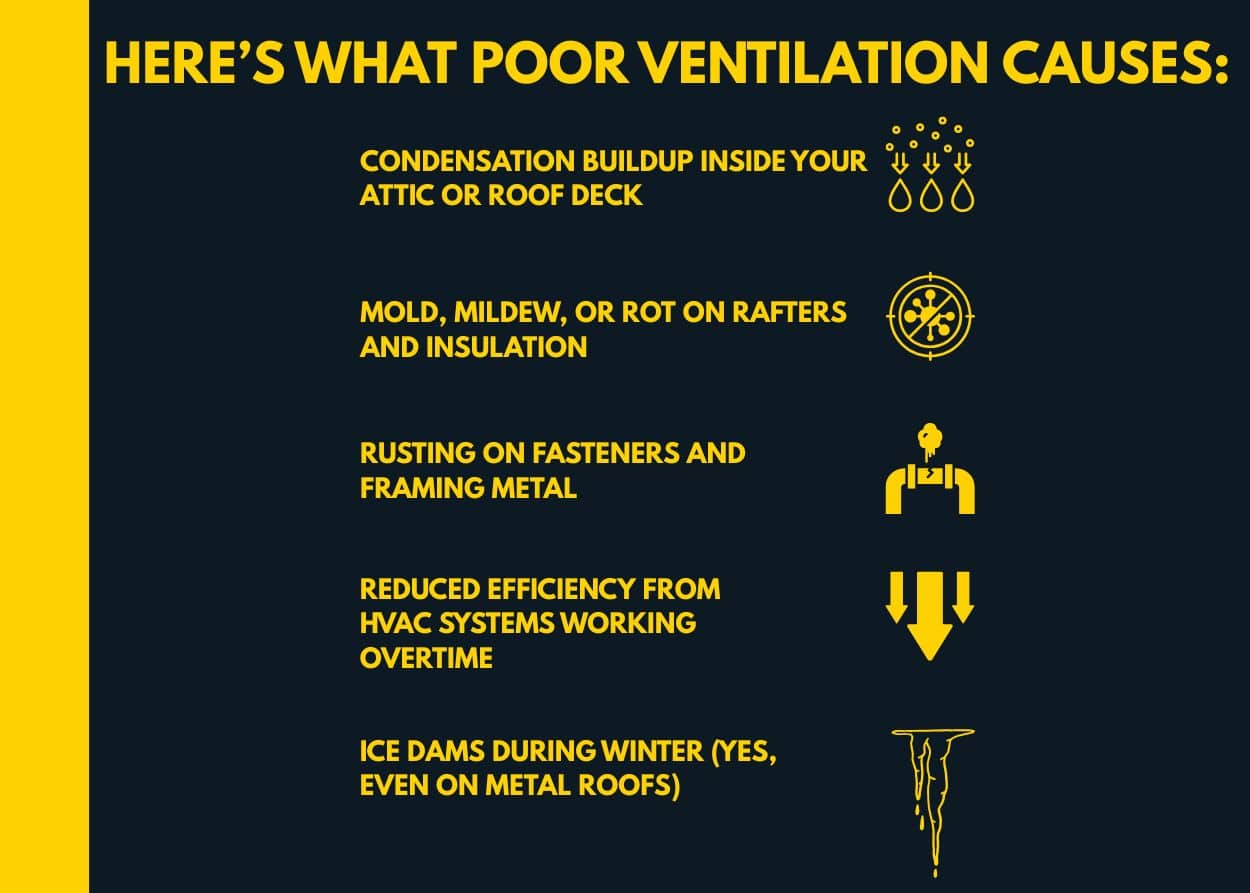
Here’s what poor ventilation causes:
- Condensation buildup inside your attic or roof deck
- Mold, mildew, or rot on rafters and insulation
- Rusting on fasteners and framing metal
- Reduced efficiency from HVAC systems working overtime
- Ice dams during winter (yes, even on metal roofs)
Metal conducts heat and cold faster than shingles, so temperature swings inside your roof cavity can be more extreme. Proper airflow keeps those swings in check, helps regulate indoor temps, and protects everything under the panels. And with the durability of a metal roof, the attic will likely have fallen apart long before the roof’s appearance starts to deteriorate.
Common Types of Metal Roof Ventilation Systems
Let’s look at the four most common vent options used in metal roofing systems. Note that these vents are not exclusive to metal roofs.
1. Ridge Vents
Installed at the peak of the roof, ridge vents run the full length of the ridge line. They allow hot, moist air to escape naturally, without the need for moving parts. They’re nearly invisible from the ground and provide consistent ventilation across the attic space. Ridge vents work best in conjunction with soffit vents, creating an in-and-out effect that allows cooler air to flow through the soffit and letting warmer air out the ridge vent.
Best suited for: Homes, barns, warehouses, or shops with a peaked or gable-style roof.
Not suitable for: Roofs without a long central ridge, such as hip or pyramid styles.
2. Soffit Vents
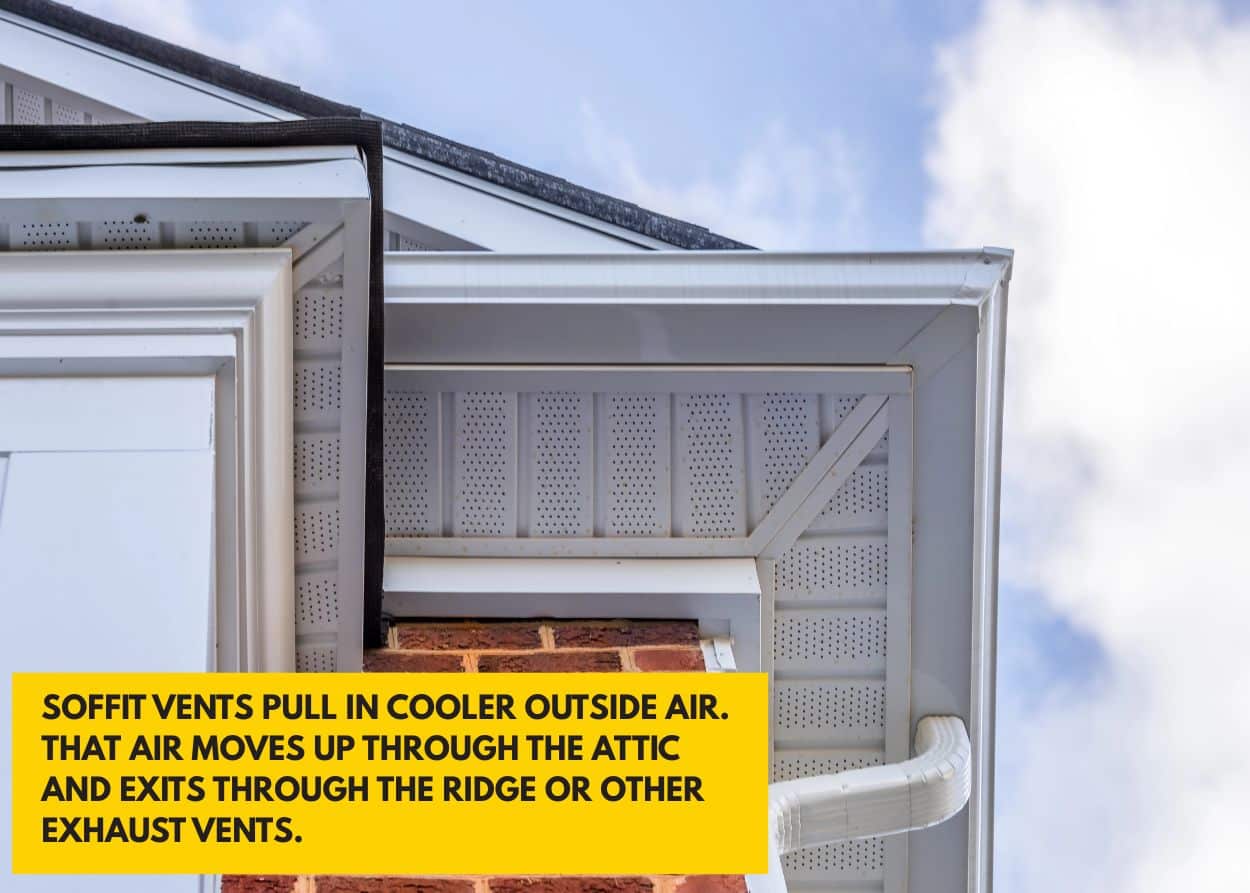
These are installed under the eaves (where the roof meets the walls). Soffit vents pull in cooler outside air. That air moves up through the attic and exits through the ridge or other exhaust vents. As mentioned above, soffit vents are an ideal complement to ridge vents.
Best suited for: Any structure that also has ridge, gable, or turbine vents.
Not great for: Buildings without an overhang or adequate soffit area.
3. Gable Vents
Gable vents are placed on the exterior walls near the roof peaks. They allow air to exit or enter on opposite ends of the attic horizontally, depending on the wind direction and building pressure.
Gable vents can also be used in conjunction with soffit vents. As warm air gets pushed out of the gable vent, cooler air from the soffit is pulled into the attic from outside, creating a cooling effect.
The catch with gable vents? Their effectiveness is highly dependent on wind direction—with little to no wind flowing through the gables, the amount of warm air exiting the attic is significantly reduced. Gable vents are also large, gaping holes in your attic, which increase the risk of critters, such as raccoons, entering the attic, and water being forced into the attic during blowing storms.
Best suited for: Gable-style buildings with open attic spaces.
Not great for: Large structures or those with complex roof shapes—airflow can be uneven.
4. Turbine Vents
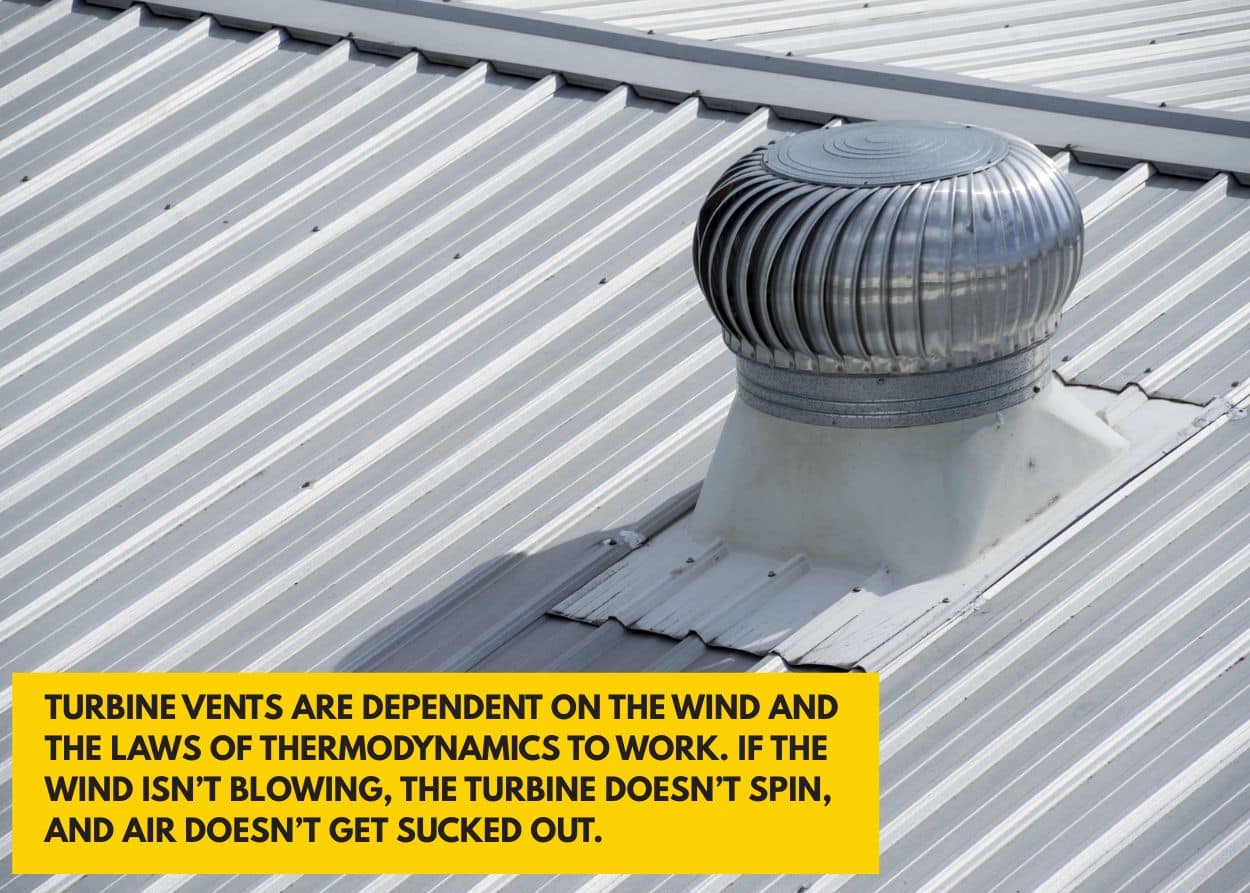
Turbine vents (also known as whirlybirds) are round, spinning vents that utilize a combination of wind power and convection forces of hot air to draw air out of the attic. When hot air rises through the turbine, it causes the turbine to turn, slowly drawing the hot air out. From the outside, wind hits the turbine blades, causing the turbine to rotate faster and creating suction that draws hot air up and out.
The catch with turbine vents? They’re dependent on the wind and the laws of thermodynamics to work. If the wind isn’t blowing, the turbine doesn’t spin, and air doesn’t get sucked out. A small roof cavity also means there isn’t enough hot air to drive the turbine blades from the inside. Improper installation that ignores the availability of wind and movement of hot air also essentially negates the effectiveness of these devices.
The other con of turbine vents is that they’re mechanical, which means they’re dependent on maintenance to keep working. Neglected turbines will get squeaky or malformed, so they don’t spin freely, negating the function of the system.
Turbine vents are popular in Australia, which is why many YouTube videos about these vents have Australian-accented voiceovers.
Best suited for: Older barns, rural buildings in windy areas, and Australians.
Not great for: Homes with a modern aesthetic or areas with minimal wind exposure.
How Each Type Works (And Where It Shines)
The goal of roof ventilation is straightforward: to circulate air, bringing in fresh air and removing stale, hot, or moist air.
But each system does that a little differently.
Ridge + Soffit Combo: The Power Couple
This is the gold standard. The ridge vent acts as the exhaust, while the soffit vent acts as the intake. Together, they create a natural cycle of airflow called the “stack effect.”
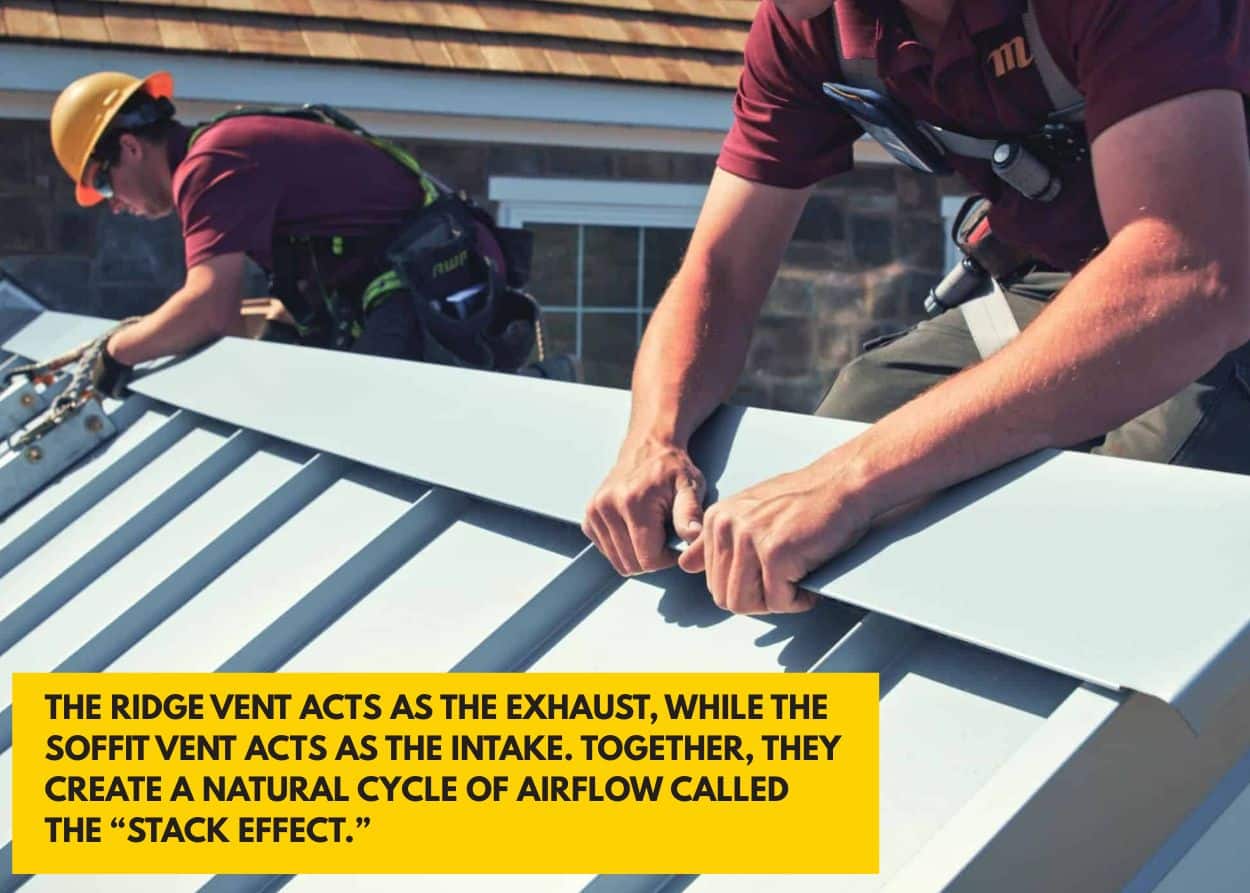
- Hot air rises and escapes through the ridge vent.
- Cooler air is pulled in through soffit vents at the bottom of the roof.
- Air flows continuously—no motors, no noise!
This setup works silently and constantly. It's energy-free, hidden, and highly effective.
Gable Vents: The Side-Exit Option
Gable vents work okay in smaller spaces, but don’t create a balanced airflow system. They rely on wind or pressure differences to move air, which means inconsistent performance. They're better than nothing, but not ideal if you want uniform attic ventilation.
Turbine Vents: Old School Muscle
Turbines physically spin to suck air out. They do work—but only when the wind blows. And over time, they can squeak, seize up, or leak if not correctly installed. Still, they're helpful for certain barns, outbuildings, and industrial structures where appearance isn’t a concern.
Which Vent System Is Right for You?
The correct vent system for you depends on a few factors:
Roof Design
- Gable or A-frame roof? Ridge and soffit vents are likely your best bet.
- Hip roof or pyramid? Limited ridge space means you may need box or turbine vents.
- Flat roof? You’ll need a completely different setup with powered or low-profile box vents.
Building Use
- If it’s a residence, opt for a system that maintains consistent attic temperatures throughout the year.
- For shops or garages, airflow is most important when storing tools, machines, or temperature-sensitive materials.
- In pole barns or warehouses, continuous venting helps protect livestock, equipment, and framing from humidity.
Climate
Cold regions with snow? You need air movement to prevent ice dams. Hot, humid areas? You need to remove moisture and heat before mold or mildew can set in.
Aesthetics
Turbines and box vents stick out (literally) like sore thumbs. Ridge vents are practically invisible, especially on the smooth, sleek lines of metal roofs.
Roofing Material
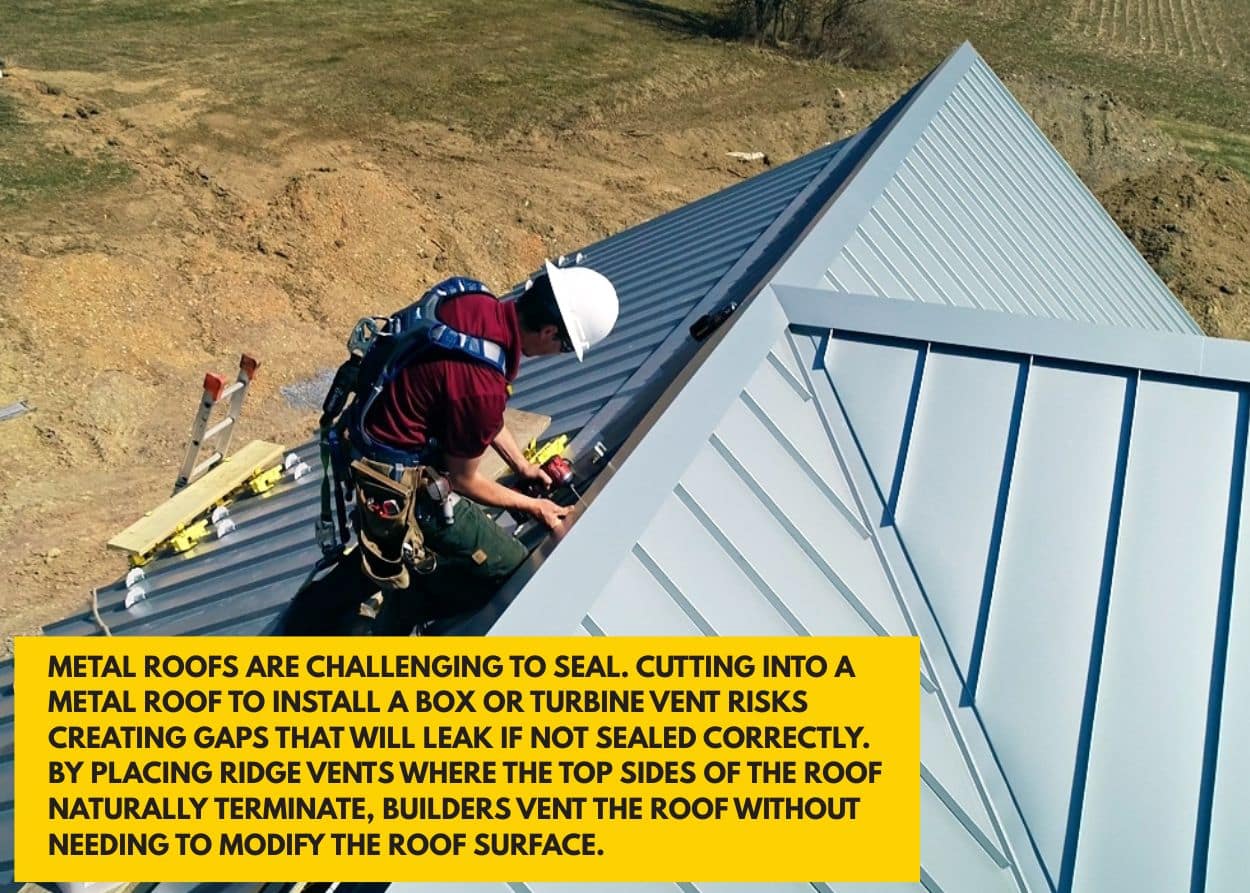
Metal roofs are challenging to seal. Cutting into a metal roof to install a box or turbine vent risks creating gaps that will leak if not sealed correctly. By placing ridge vents where the top sides of the roof naturally terminate, builders vent the roof without needing to modify the roof surface.
Why Ventilation Boosts Roof Life
Here’s what proper ventilation helps prevent:
- Condensation: Moisture from laundry, cooking, and bathing rises into the attic. Without ventilation, it condenses and saturates insulation and framing.
- Mold and rot: Constant moisture creates an ideal environment for mold and rot to grow.
- Panel warping: While metal roof panels readily resist heat trapped within, the heat damages and distorts materials under the roof, such as rafters and insulation, which in turn potentially affect the panels themselves, causing deformation or warping (heat will also damage conventional roofing materials such as shingles, melting the adhesives bonding the shingles to each other).
- Rust: Moisture in the attic causes metal fasteners and framing to corrode over time.
- Ice damming occurs: When warm air melts snow on the roof, which then refreezes at the edge and pushes water up under your panels or shingles.
Ventilation helps your roof breathe. And that helps it last longer—sometimes 10–15 years longer than unventilated counterparts.
Can You Retrofit Vents on an Existing Metal Roof?
Short answer: yes. But it’s not a weekend DIY project.
Here’s why retrofitting is tricky:
- You need to match the vent to the existing panel profile
- Openings need to be sealed carefully to prevent leaks.
- Proper airflow still depends on the soffit or intake vents.
- Older roofs may not have the structural integrity to accommodate new cuts or additions.
- Cutting into a standing seam roof without damaging it requires experience.
Your best bet for success is to have a pro install a vent that’s specifically built for metal roofs, like Snap-Z.
The Snap-Z Advantage
Not all ridge vents are built with metal roofs in mind. Snap-Z is.
Here’s how we’re different:
- Built for standing seam and hidden fastener panels: No awkward brackets or ugly seams!
- Made of aluminum or steel: Long-term durability in all weather conditions.
- Pre-cut lengths with pre-applied butyl tape: Save time and reduce installation errors.
- Integrated wire mesh: Keeps pests out without choking airflow.
- Low-profile aesthetic: Blends seamlessly with your roof, especially when paired with our recommended black finish.
- Fast install = less time on hot roofs: More jobs per day, fewer heat stroke risks.
Roofers love it because it’s simple to use. Homeowners love it because it’s built to last.
And yes—it works with your soffit vents to create that perfect flow.
Snap-Z has been helping roofers get it right since 2015—Thousands of installs, with minimal callbacks. That’s the kind of reputation you want riding on your ridge.
Conclusion
Whether you’re putting a roof on your dream home, an equipment shed, or a commercial building, don’t skip the venting details. Your roof needs to breathe, and your attic deserves to stay dry, cool, and mold-free.
Now you know the difference and why choosing the right system for your metal roof makes all the difference in the long run. Snap-Z is the way to go for pro-grade vents built just for metal roofs. They’re backed by experience, built with precision, and trusted by roofers nationwide.
Ready for a superior ridge vent for your metal roof?
Contact us for expert advice on becoming a Snap-Z installer or installing Snap-Z on your metal roof.