
Seasonal Roof Vent Maintenance: Simple Steps to Protect Your Home Year-Round
Your roof handles heat, cold, wind, and rain. Day after day. Season after season. How does it survive long-term? Healthy airflow. How do you achieve healthy airflow? Seasonal roof vent maintenance.
Roof vents remove hot, moist air and bring in cooler, drier air. Quick checks each season prevent costly damage, boost efficiency, and extend the life of your roofing system.
Our team at Snap-Z knows roof issues inside and out. Since 2015, our seamless metal ridge vents have helped homeowners and roofers keep attics dry, airflow balanced, and roofs looking sharp.
The good news? You don’t need special tools. Just know what to check and when to call a pro.
Follow this guide to save on energy, avoid moisture damage, and keep your roof working efficiently year after year.











TL;DR – Seasonal Roof Vent Maintenance
- Healthy airflow = longer roof life and lower energy costs.
- Do quick seasonal checks: clear debris, clean intakes, watch for frost/musty smells.
- Look for red flags: damp insulation, uneven temps, high energy bills, winter icicles.
- DIY: light cleaning and debris removal.
- Call a pro: when you notice damage, moisture, or vent conflicts.
How Roof Vents Work
Before we dive into the checklists, let’s make sure the basics are clear. When you understand airflow in your attic, the rest makes sense. You’ll know what “energy efficient” looks like, which vents to check, and why small clogs cause big problems.
Warm, humid air rises into your attic. Ridge vents at the top let that air escape. Intake vents (usually in the soffits) pull in cooler air from outside. That steady flow keeps your attic drier and your roof cooler. Balance is key. Good exhaust needs good intake. No intake? Airflow stalls. Moisture lingers. Problems follow.
Bottom line: Clear, balanced vents = lower energy bills and fewer headaches.
Safety First
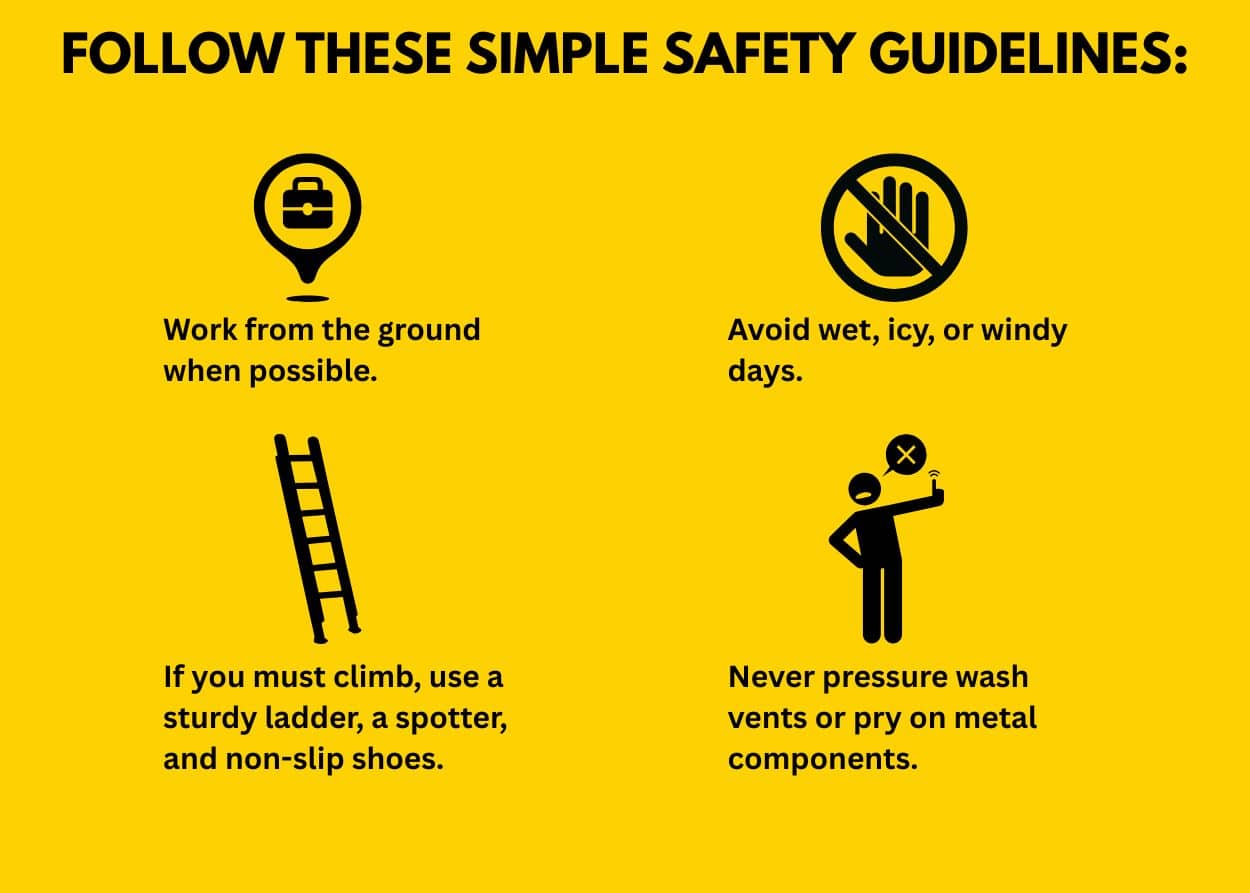
Before a seasonal maintenance check, prepare and gather the proper tools. Follow these simple safety guidelines:
- Work from the ground when possible.
- If you must climb, use a sturdy ladder, a spotter, and non-slip shoes.
- Avoid wet, icy, or windy days.
- Never pressure wash vents or pry on metal components.
Helpful tools: binoculars, gloves, dust mask, flashlight, leaf blower or soft brush, painter’s pole with soft-bristle head, smartphone for photos, trash bag.
Now, let’s look at what to do each season to keep your roof maintained and doing what it does best—keeping you dry and comfortable.
Spring Roof Vent Maintenance (Post-Winter Recovery)
Goal: Clear winter leftovers and seal out spring rain.
- Look from the ground. Scan the ridge line for bent sections, lifted pieces, or missing fasteners.
- Clear debris. Sticks, branches, and wind-blown junk collect around ridge and intake vents. Gently remove them with a soft brush or blower.
- Check seals. If your ridge vent uses sealant tape or butyl, look for cracking or gaps. Note any issues for a pro to repair.
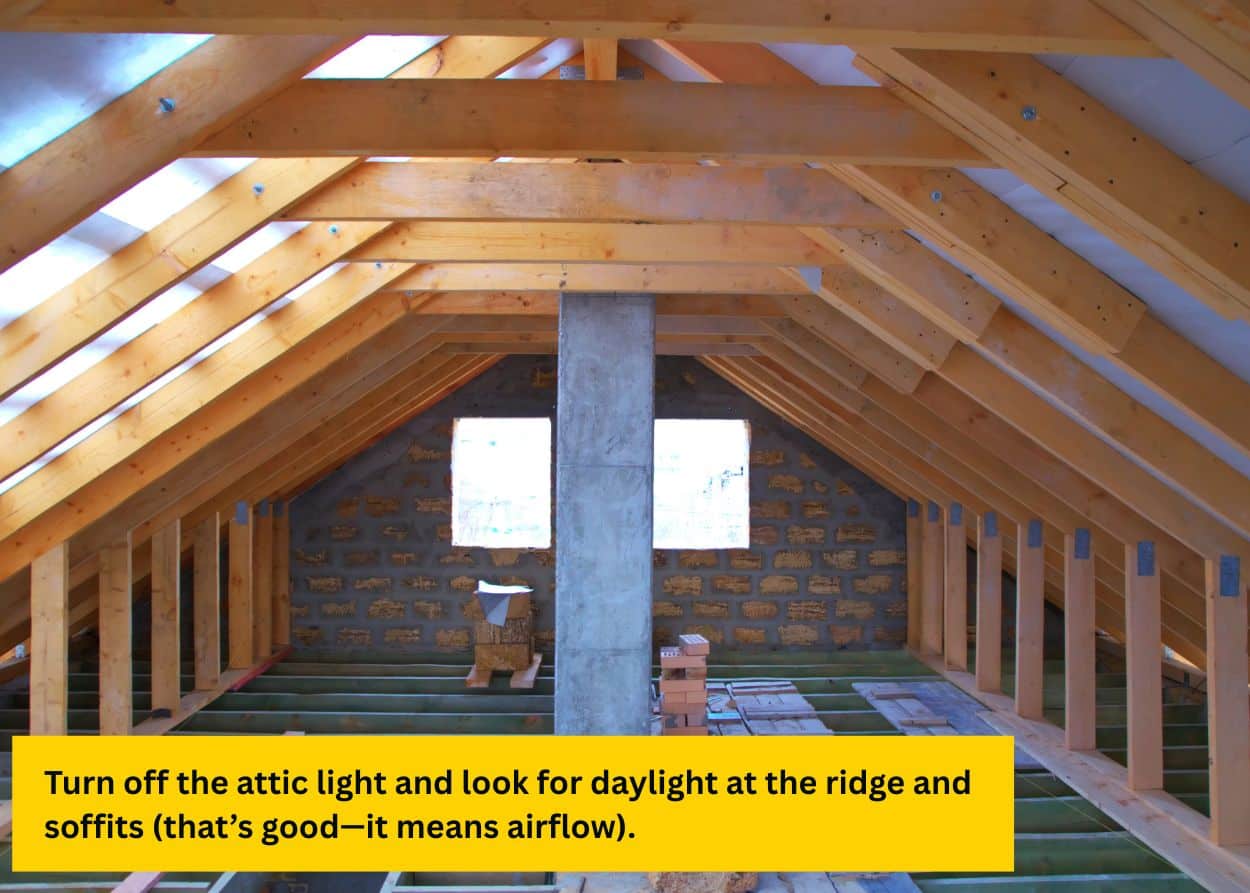
- Attic check. Turn off the attic light and look for daylight at the ridge and soffits (that’s good—it means airflow). Then inspect insulation for damp spots, look for rusty nail tips (“frost nails”), and sniff for musty odors.
Pro tip: If you see staining on roof sheathing or damp insulation, schedule a ventilation assessment. Catching moisture now prevents mold by summer.
Summer Roof Vent Maintenance (Heat + Pests)
Goal: Max airflow to fight heat and humidity.
- Critter sweep. Birds, wasps, and insects love cozy vent openings. Remove any nests with care and check that built-in screens are clear.
- Pollen and dust. Gently brush or blow off buildup on ridge louvers and soffit screens. Clogged screens choke airflow.
- Temperature reality check. On a hot day, compare your attic temperature to the outside temperature. While some warmth is normal, your attic should not be significantly hotter than the temperature outside. If the attic feels much hotter than the outdoor air, it could indicate weak airflow.
- Energy signal. If the A/C runs nonstop, poor ventilation could be part of the problem.
Pro tip: Attic fans are not a magic fix for poor intake. Confirm that the soffits are open and not buried in insulation.
Fall Roof Vent Maintenance (Leaf Season Prep)
Goal: Keep intakes open and get winter-ready.
- Clear the intakes. Leaves, pine needles, and cobwebs clog soffit vents fast. Clean them gently so air moves freely to the ridge.
- Trim trees. Cut back branches 6–10 feet from the roof. Fewer leaves on the roof = fewer blockages.
- Attic airflow path. Make sure insulation isn’t covering the soffit vents. Confirm baffles are in place to keep a clear channel from the soffit to the attic.
- Moisture scan. Look for any new dark spots or a musty smell. Fall is a great time to fix small issues before winter locks in moisture.
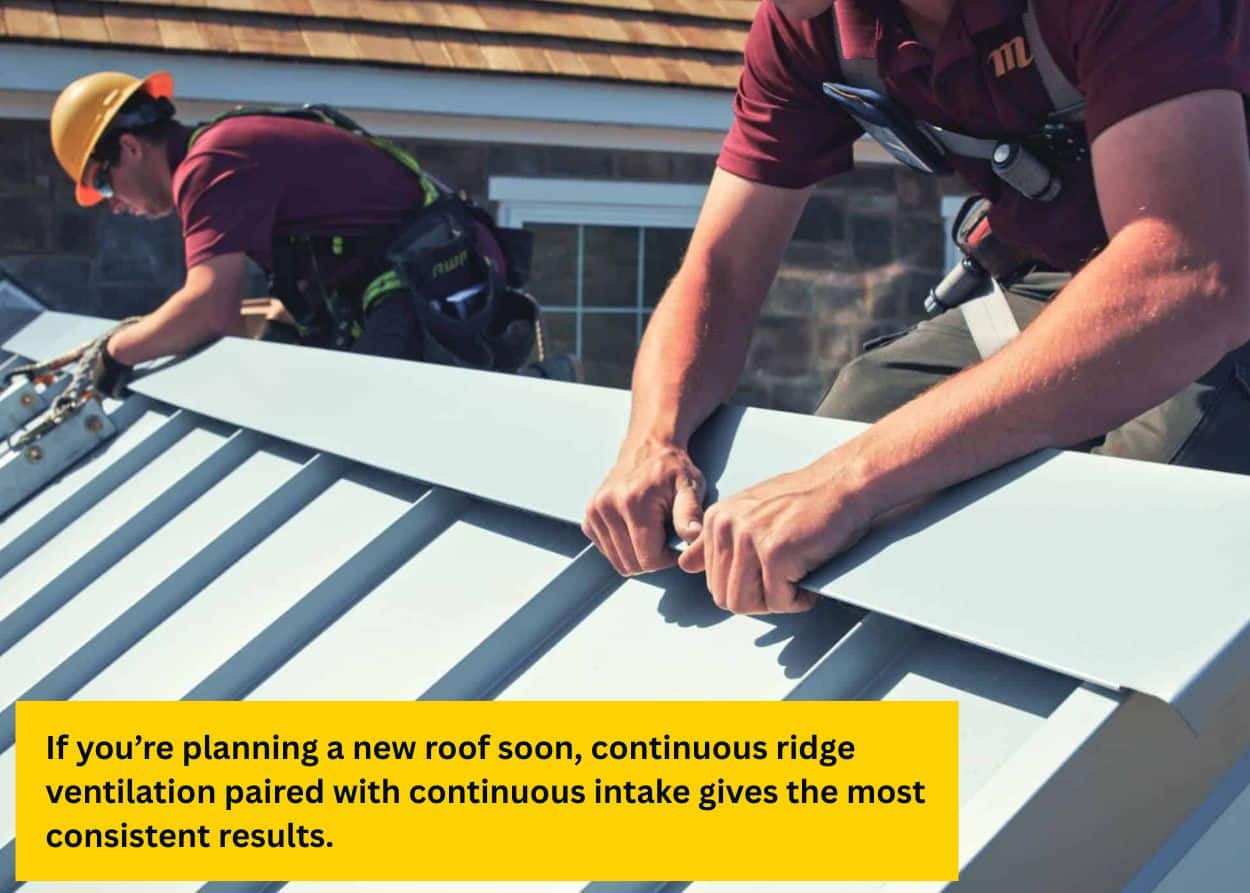
Pro tip: If you’re planning a new roof soon, continuous ridge ventilation paired with continuous intake gives the most consistent results.
Winter Roof Vent Maintenance (Ice + Snow Awareness)
Goal: Prevent ice dams and trapped moisture.
- After heavy snow. From the ground, confirm the ridge area isn’t buried by drifts. Don’t chip ice at the vent—damage happens fast. If it’s blocked, call a pro.
- Watch for attic frost. On cold mornings, check for frost on nails or sheathing. This means humid air is stuck inside. You may need better air sealing and/or ventilation tweaks.
- Check exhaust fans. Bathroom and kitchen fans must vent outdoors—not into the attic.
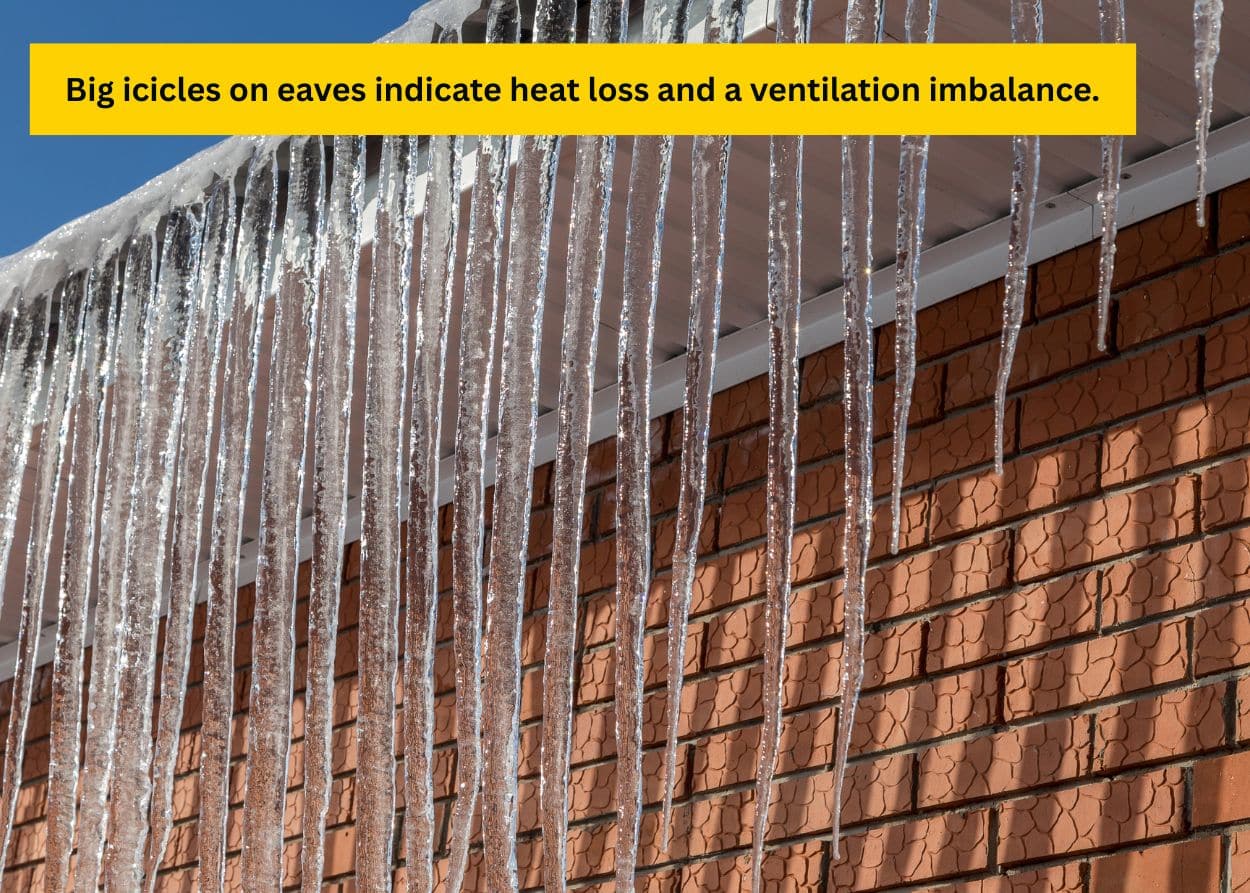
- Ice dam signs. Big icicles on eaves indicate heat loss and a ventilation imbalance.
Pro tip: If ice dams keep returning, ask for a full attic/roof assessment. Air sealing, insulation, and ventilation work together.
7 Common Signs of Roof Vent Problems
If you know what to look for, your home gives you clues before major leaks or mold show up. If you spot a couple of these red flags, it’s worth a closer look.
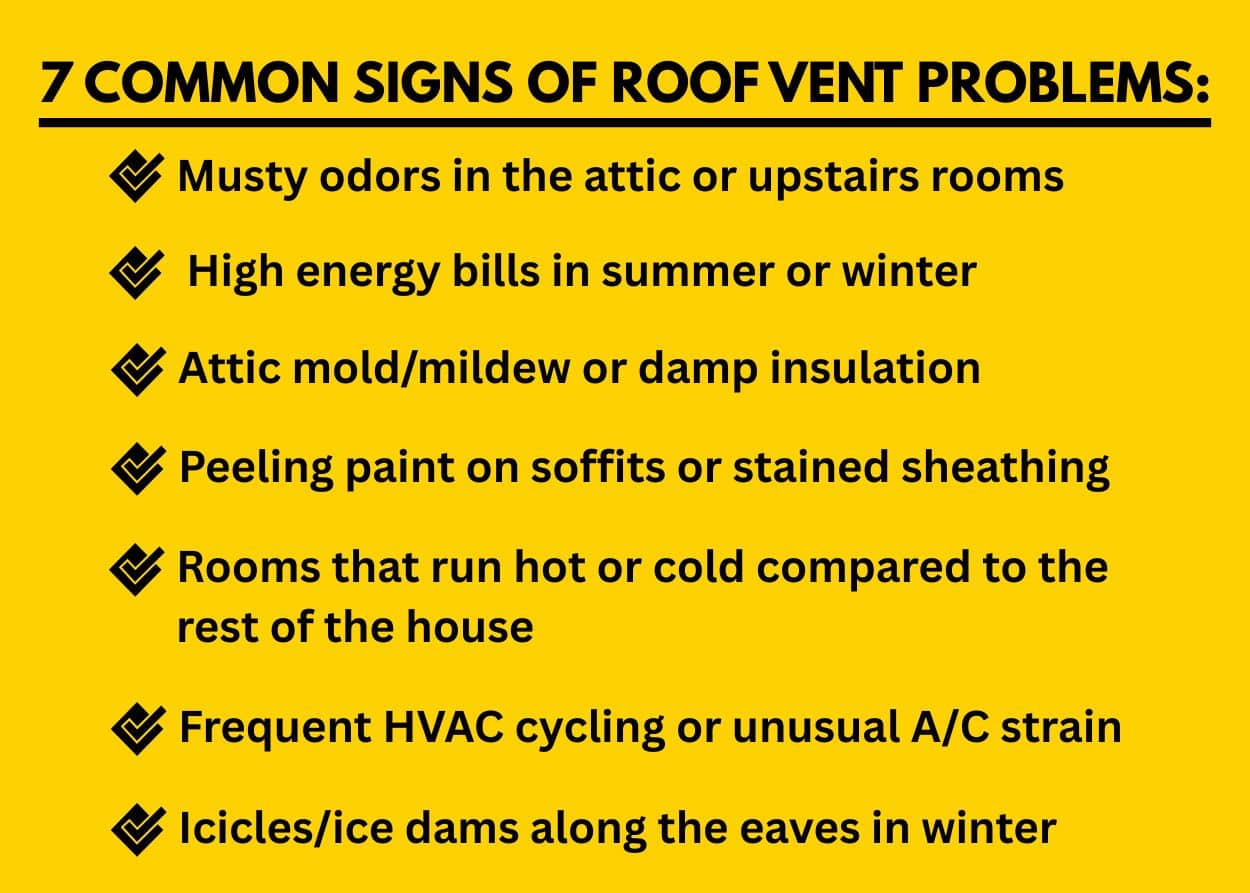
- Musty odors in the attic or upstairs rooms
- High energy bills in summer or winter
- Attic mold/mildew or damp insulation
- Peeling paint on soffits or stained sheathing
- Rooms that run hot or cold compared to the rest of the house
- Frequent HVAC cycling or unusual A/C strain
- Icicles/ice dams along the eaves in winter
Simple DIY vs. “Stop and Call a Pro”
Here’s the line between quick homeowner jobs and pro-only work. Remember, the goal isn’t DIY pride. It’s a healthy, long-lasting roof.
DIY is fine for:
- Visual checks from the ground
- Light debris removal at the ridge and soffits
- Gently cleaning screens and louvers
- Taking photos to document issues
Call a pro for:
- Loose, bent, or damaged ridge vent sections
- Re-sealing or re-fastening any vent components
- Persistent moisture, mold, or attic frost
- Snow/ice blockage at the ridge
- Vent configuration problems (e.g., “short-circuiting” with multiple high vents)
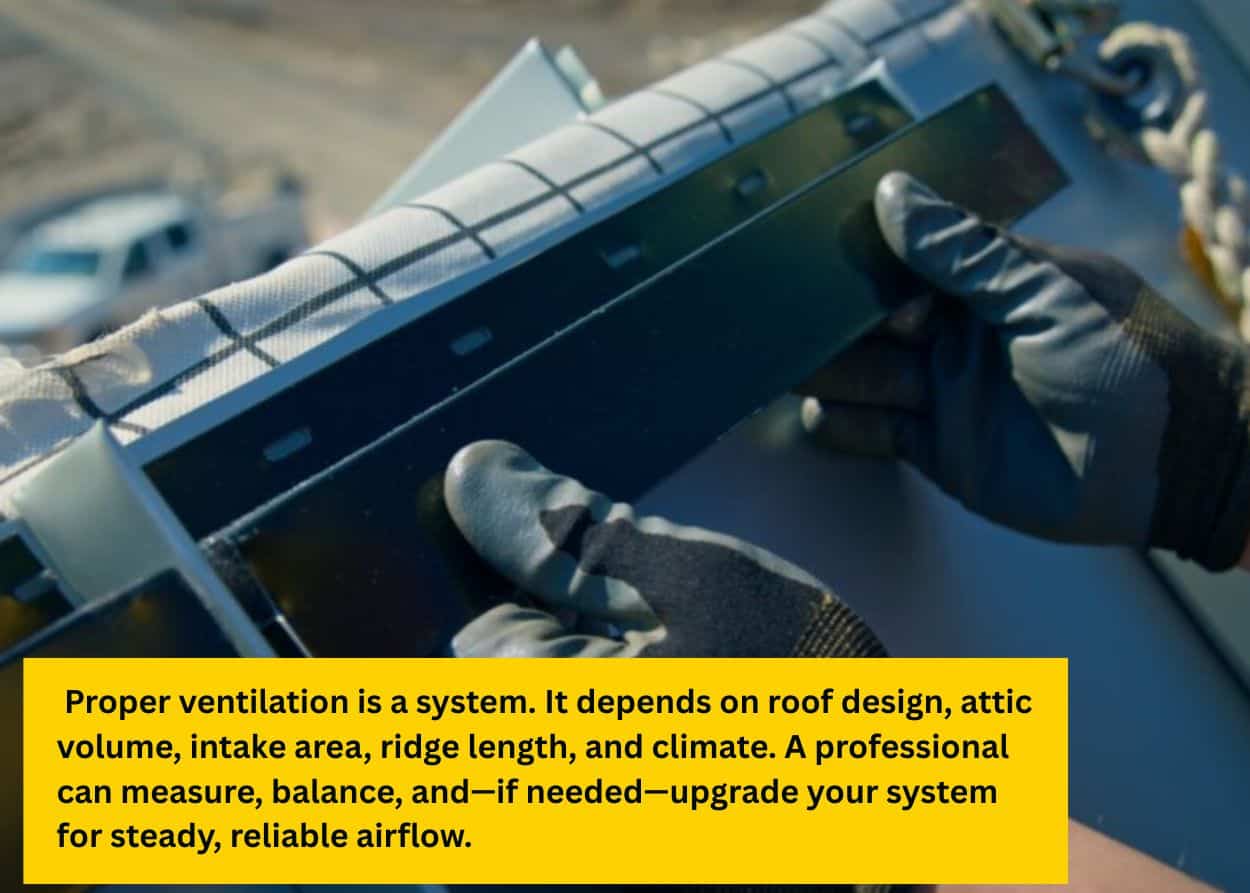
Why bring in an expert? Proper ventilation is a system. It depends on roof design, attic volume, intake area, ridge length, and climate. A professional can measure, balance, and—if needed—upgrade your system for steady, reliable airflow.
Upgrade Options (If Your Checkup Finds Bigger Issues)
What if your checkup uncovers bigger issues? Here are the most common ways to upgrade to keep airflow balanced and prevent problems from coming back:
- Too little intake air. Add continuous soffit vents or other intake options to match your ridge vent. Balanced in = better out.
- Vents are fighting each other. Box, turbine, or gable vents can conflict with ridge vents, disrupting airflow. A pro can remove or reconfigure them.
- Old traditional plastic or metal. Today’s ridge vents use advanced materials—high-tech composites, engineered plastics, and lightweight, corrosion-resistant aluminum. These options resist UV damage, stay flexible, and last longer.
Analogy: Think of your roof like your lungs. Ridge = exhale, soffit = inhale. You need both. Clear “airways” mean a healthy system.
Why Homeowners Choose Our Team
Homeowners choose Snap-Z because our seamless ridge vents deliver durable, high-airflow ventilation that installs fast, looks clean on standing-seam roofs, and has been used and proven by roofing professionals since 2015.
Snap-Z started when a roofer asked our parent company, Glick Metals, to build a ridge vent for standing-seam roofs that was more durable, faster to install, and moved air better than what was on the market at the time. We took the challenge and turned it into a product line that’s now trusted by thousands of roofers and distributors.
Our focus: Treat homeowners, roofers, and dealers the way we would want to be treated—backed by products that hold up and support that mission.
Ready for Worry-Free Ventilation?
Imagine a home where your roof is efficiently managing airflow, reducing energy bills, and protecting your home from moisture damage. Your attic stays dry, your roof lasts longer, and the temperature inside stays just right, season after season.
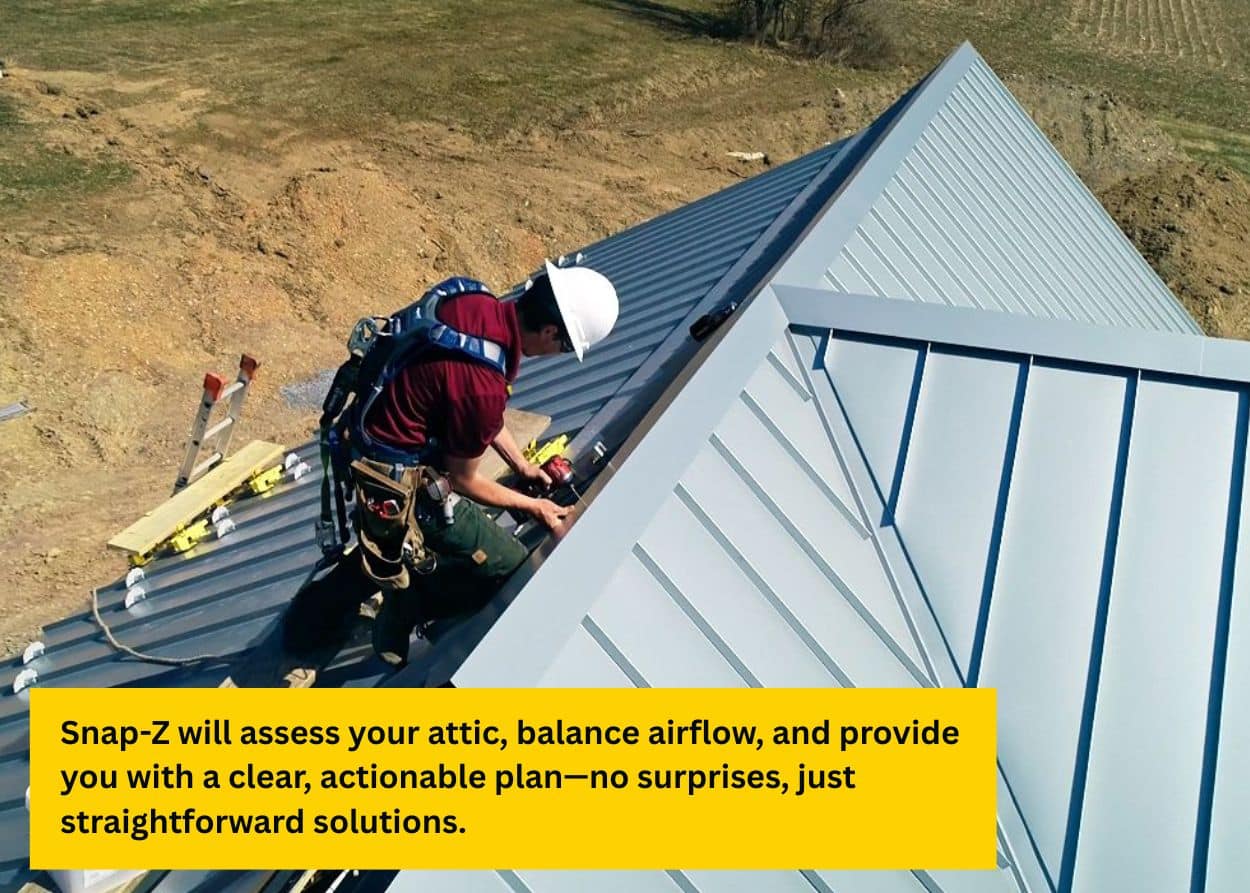
If your roof needs more than the basic seasonal maintenance, schedule your roof/ventilation inspection with Snap-Z today. We’ll assess your attic, balance airflow, and provide you with a clear, actionable plan—no surprises, just straightforward solutions.
Next Steps:
- Request your seasonal inspection or ask about a ridge vent upgrade.
- Get a tailored plan for your roof, including clear pricing and options.
- Enjoy peace of mind with a product we stand behind 100%
Click here to schedule your inspection or call 717-572-0910 to keep your roof performing at its best.